

Lucille Ball
Volume III Sneak Peek

She was born on August 6, 1911, to Désirée and Henry in Jamestown, New York, and was of English, French, and Irish descent.
Starting her career as a model, she became an actress, comedian, producer, and studio executive; she is widely recognized as the reason this little show called Star Trek ever saw the light of day, and ultimately, she was declared one of the most influential women of the 20th Century by Time magazine.
Meet Lucille Ball.
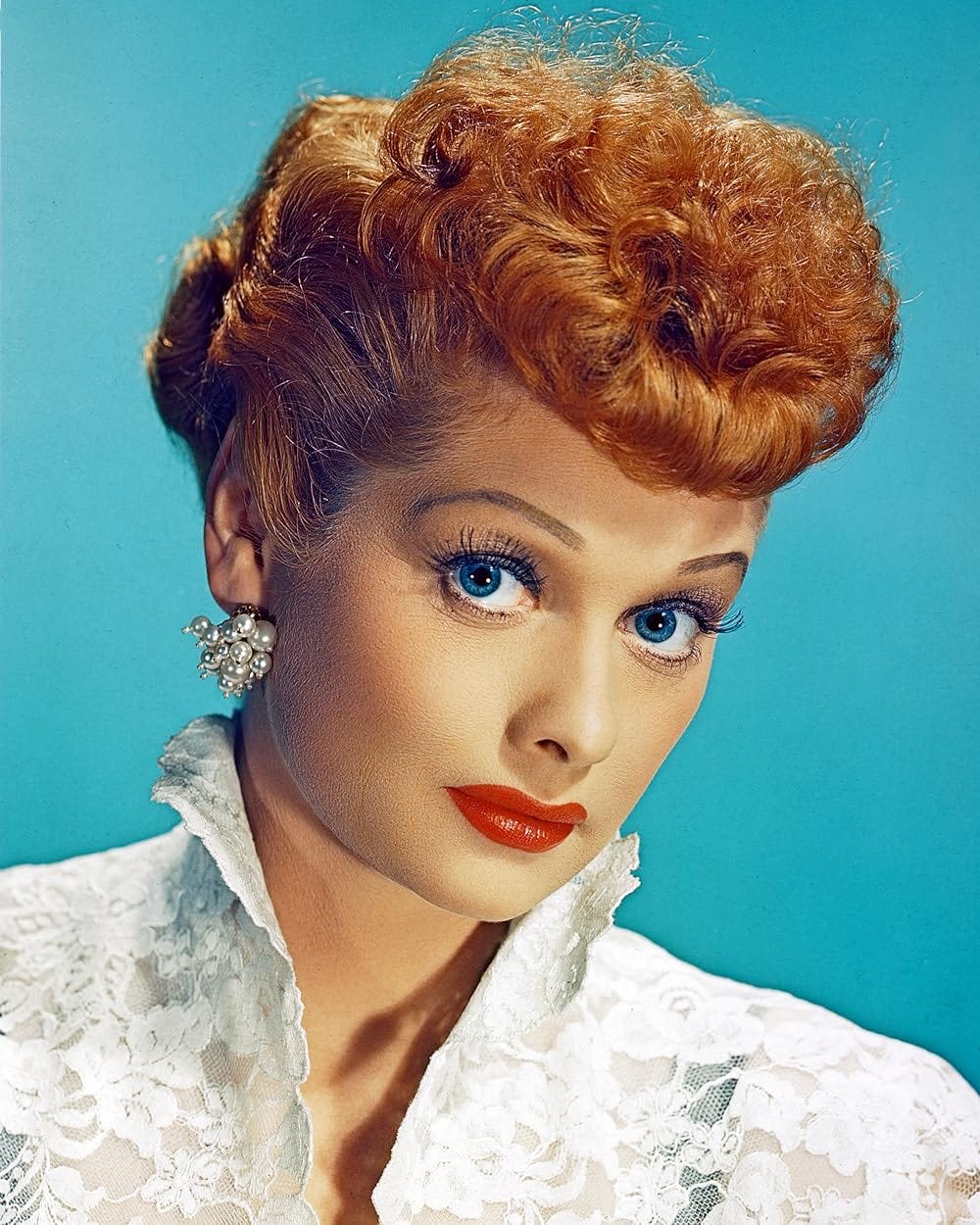
While still a toddler, Lucille Ball’s family moved several times due to her father’s career, living in New York, Montana, New Jersey, and Michigan before she turned three years old. When her father died at the young age of 27 from typhoid fever, her mother, who was pregnant with Ball’s soon-to-be little brother, Fred, moved them back to New York, where they resided with Ball’s maternal side of the family, including her grandparents, an aunt and uncle, and a cousin with whom Ball grew very close.
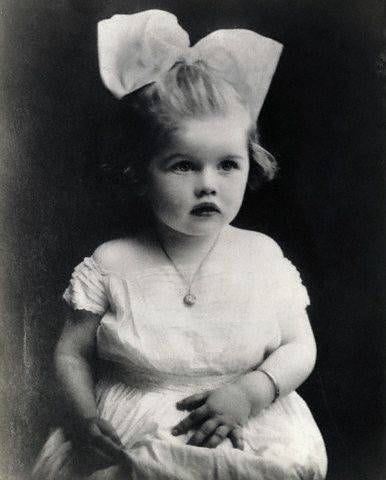
When her mother remarried and left the area to look for work, her new stepfather’s parents, a couple of puritanical, religious zealots, took her and her brother in for a few years, making Ball’s life fucking hell with unhinged outbursts fueled by their convenient interpretation of the Christian bible, punishing Ball for such offenses like “vainly” admiring herself in the bathroom mirror, which was the only mirror allowed in the house.
When her mother was back in the picture more regularly, she was encouraged to audition for the Shriner’s Club that Ball’s stepfather belonged to as they needed girls for the chorus line. She wasn’t too jazzed about it at first, but she reluctantly agreed to try it out. Once on stage, she was exhilarated by the praise she received from the audience and the showrunners alike. She knew that this was a path she wanted to follow.
When Ball was 14 years old, she became involved with a 21-year-old creep named Johnny, much to the chagrin of her mother, who did everything short of locking her daughter up to dissuade her from carrying on with this guy her mother considered a hoodlum. Nothing worked.
Desperate, her mother and stepfather scraped together enough money to enroll her in New York’s John Murray Anderson School for the Dramatic Arts, thinking this might be just the distraction she needed. But Ball, due to the rigid and snotty staff at the school, was miserable. She was told on the regular that she wasn’t pretty enough or talented enough to ever succeed in show business, and they told her mother to stop wasting their money on this “talentless girl.” Ball would say that the only real thing they did was terrorize the teenage Ball.
As she told interviewers when asked about this part of her life, she stated: “All I learned in drama school was how to be frightened.”
While traumatized, she was also pissed and filled with a fiery determination to prove the assholes at the drama school wrong. When she was 17, she caught the eye of Hattie Carnegie, a New York fashion entrepreneur, and was hired as a model. Carnegie apparently thought she was mostly pretty enough but demanded Ball bleach her natural brown hair to a bright, platinum blonde hue.
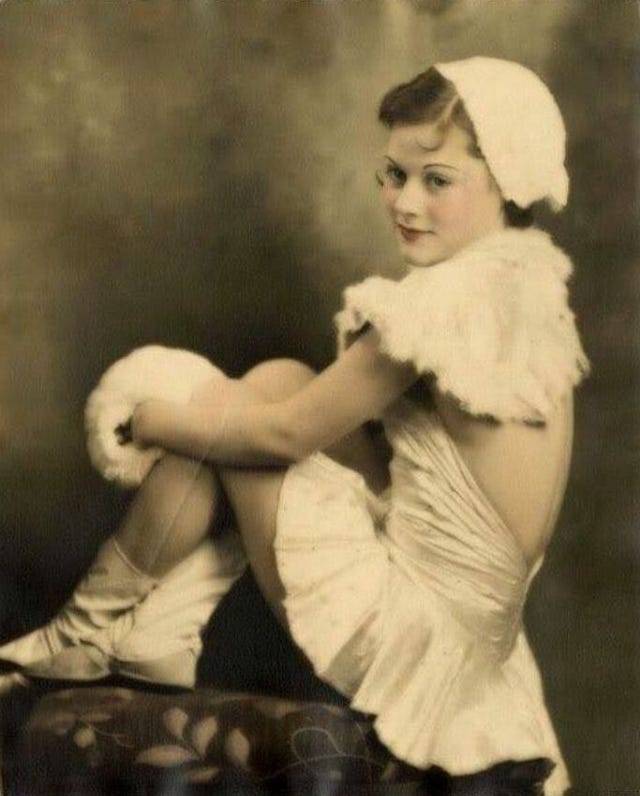
She made some decent money as a model and gained more insight into the world of entertainment during that time. Still, she would soon fall ill with the streptococcal bacteria, which was initially dismissed as merely a sore throat and later mutated into rheumatic fever. Her illness left her unable to work for two years, interrupting her burgeoning career as an entertainer.
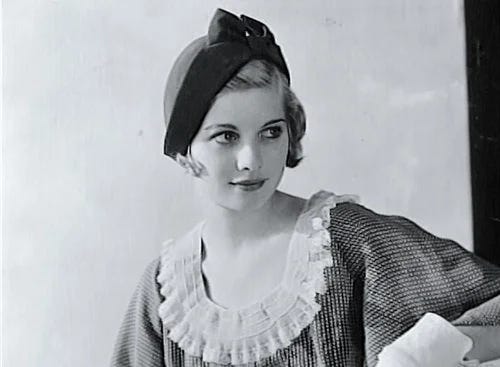
Once healthy again, she returned to modeling but also sought acting roles, temporarily changing her name to Diane Belmont.
“I always loved the name Diane, and I was driving past the Belmont racetrack, and the names seemed to fit together,” Ball told an interviewer with the Los Angeles Times.
After a few stints in small parts on Broadway, she began appearing in films in the 1930s and 1940s as a contract player for RKO Radio Pictures. Throughout her twenties, she was a chorus girl and eventually landed a few lead roles in B movies, earning the moniker of “Queen of the Bs,” a title once held by Marie Windsor and Fay Wray. From there, she began being offered supporting roles in more “A List” films. A few years later, she ditched the brassy blonde and adopted her signature copper ‘do.
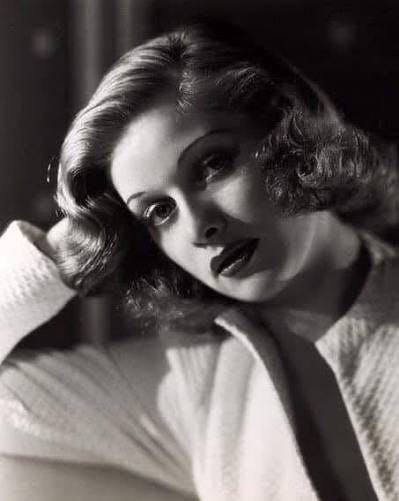
When Ball was 28, she starred in a movie titled Too Many Girls opposite Richard Carlson and Ann Miller, and critics really started taking notice of Ball.
According to the Times, people up high raved about Ball’s “pert presence” and knack for “rubber-faced slapstick clowning.”
“Pretty Lucille Ball was born for the parts Ginger Rogers sweats over,” wrote one reviewer, and she was called a “slangy, breezy wisecracking gal with a bebop rhythm to her walk” by another.
Not talented? Suck it, John Murray Anderson School for the Dramatic Arts!
It was on the set of Too Many Girls that she would meet a 23-year-old Cuban bandleader, Desi Arnaz, and fall madly in love and lust with him. After just six months of a whirlwind romance, they eloped.
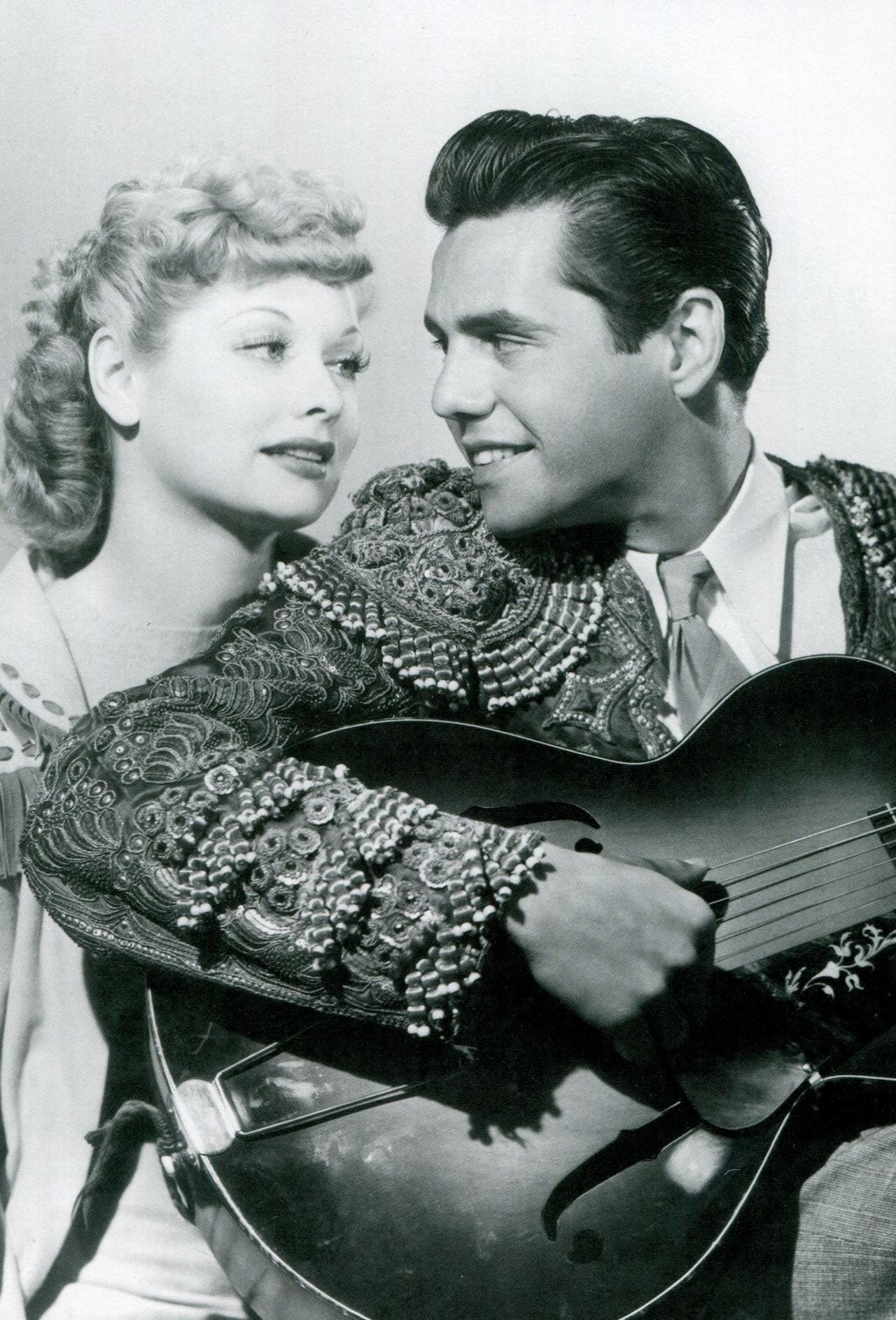
It wouldn’t be long before Desi’s inability to stop putting his penis in people other than his wife became commonplace and widely known by everyone. Between that and his drunken antics, Ball filed for divorce, but eventually relented and took him back. As a couple, they decided that if they took on more projects together, things might improve.
Ball had been starring in a comical radio show called My Favorite Husband that CBS would ultimately pick up as a television show. They wanted her to star in the TV incarnation. Still, they weren’t so sure about allowing Desi to star alongside her as her husband, mostly because people are racist motherfuckers and Desi looked and sounded entirely “too foreign” with his non-Anglo appearance and thick Cuban accent.
Ball was like, yeah, fuck that noise. In 1951, Ball and her new husband took their show on the road as a traveling vaudeville act, and people fucking loved it. The network relented after hearing the positive feedback, and they cast Arnaz as Lucy’s husband, Ricky Ricardo in I Love Lucy.
Ball was glad because now Desi would be home instead of on the road with his band and banging everything that moved.
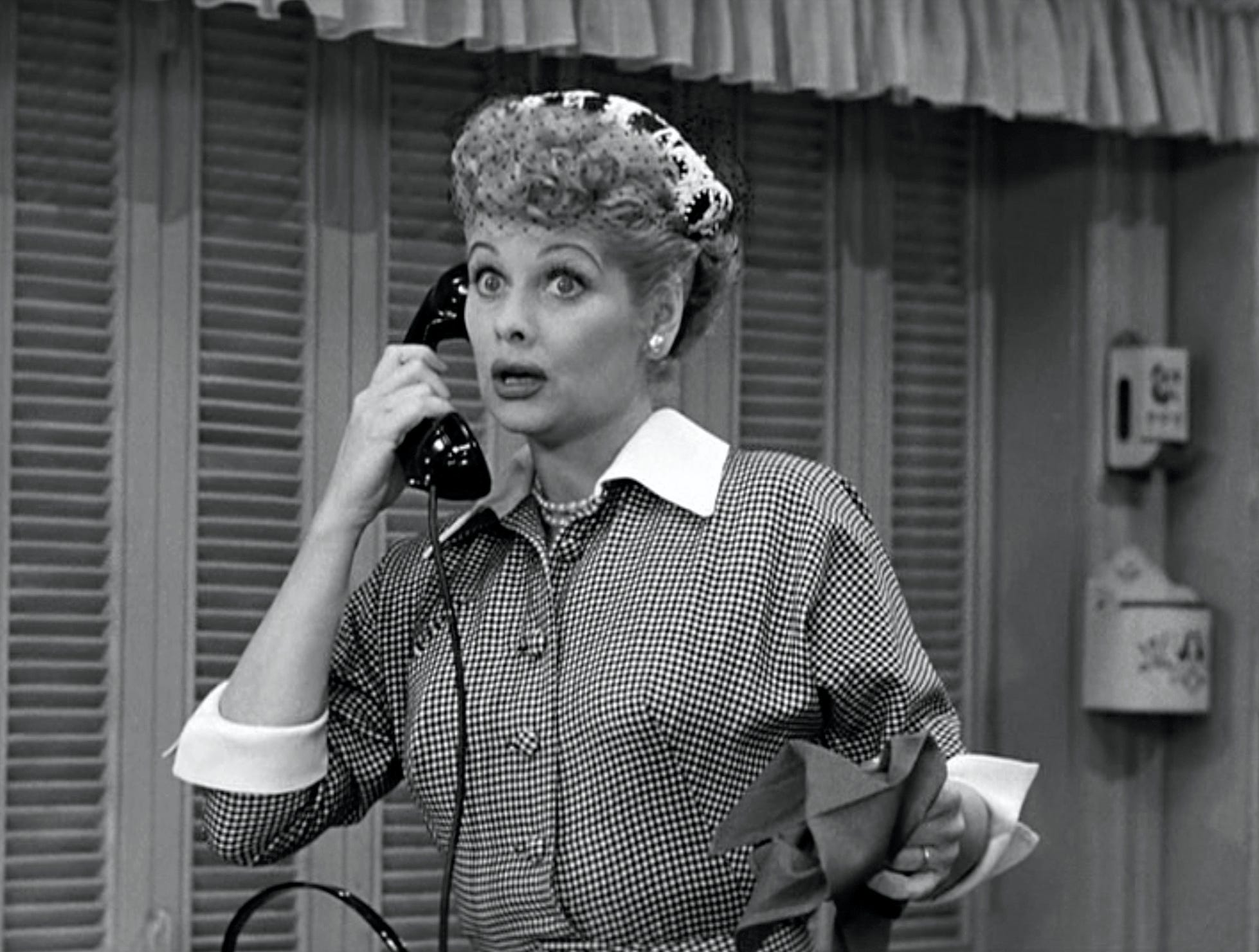
Of course, the show still had to dance around utterly benign shit like the word “pregnant” when, after Ball became pregnant in real life, they wrote the pregnancy into the show. The studio executives felt the word “pregnant” was too vulgar. Yes, this is ridiculous as fuck, but Ball still rolled with it, and they mostly used the word “expecting” so as not to upset people’s delicate sensibilities. Oh, and they titled the first episode addressing it as “Lucy is Enceinte.” Enceinte being the French word for pregnant. Someone, please make this make sense.
Oh, and forget sleeping in the same bed on screen. My word, can you imagine? The network absolutely could not, so Lucy and Ricky always slept in separate beds and, due to handwringing, the beds slowly moved further and further apart to appease advertisers. Perhaps they were hoping the world would think a turkey baster was used to facilitate the pregnancy and not gasp marital bangin’.
But the show was a massive hit and made Ball and her husband very financially comfortable. The couple formed the very first independent television production company and named it for themselves: Desilu Productions. Due to smart business acumen by both Ball and her husband, their production company’s profits reached $5 million USD by 1961.
Ball’s husband, after a short time of behaving himself when their children were born, lapsed back into his old ways of philandering and drinking his bodyweight in whatever booze was closest to him, becoming belligerent and abusive. Ball finally got sick of his bullshit and divorced him in May of 1960. Regardless, they stayed close and kept a mutual respect and fondness for each other, which is a lot easier to do when the shit behavior no longer directly affects you.
They would both go on to remarry others, but Ball’s good friend and sometimes colleague, Carol Channing, said that they both spoke so adoringly of each other that it was easy to forget they were actually divorced. Desi Arnaz’s last words before his 1986 death were, “I love you too, honey. Good luck with your show.”
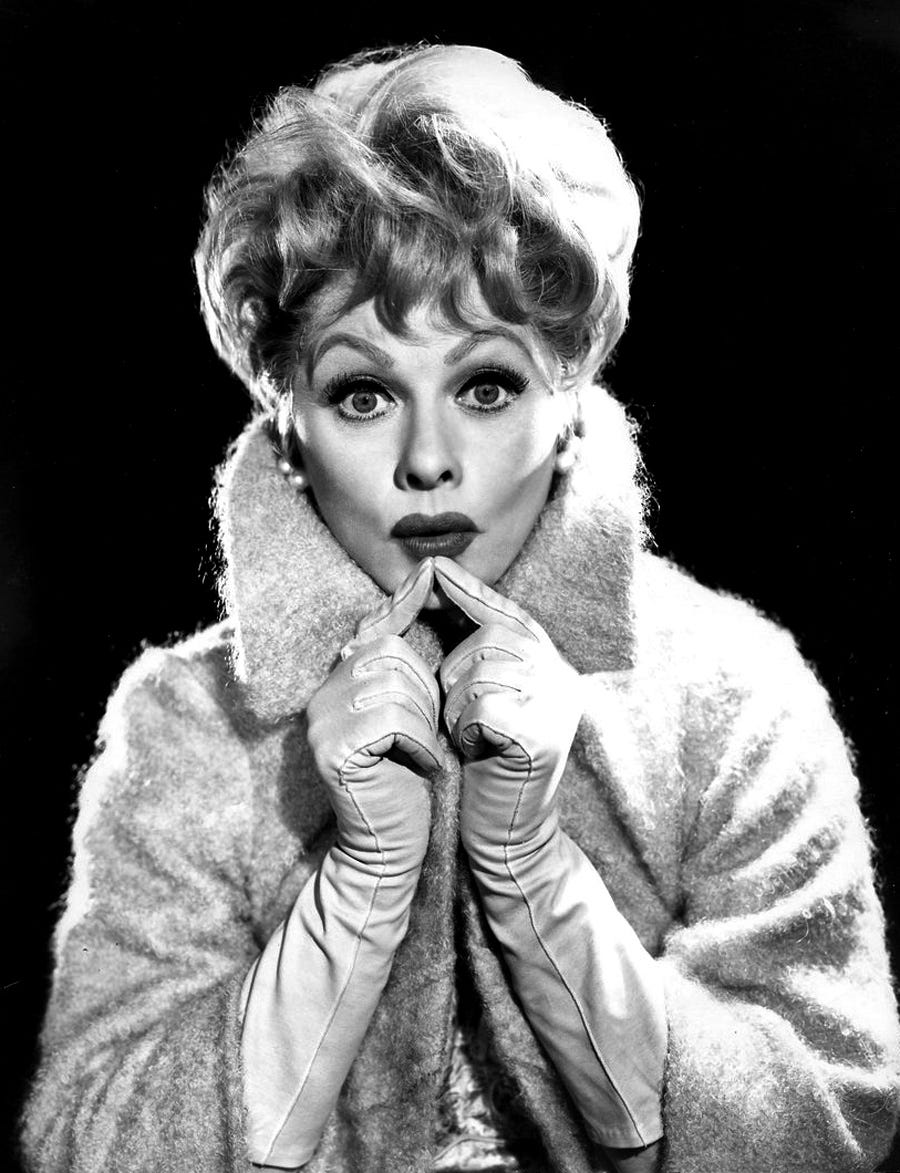
After their divorce, Ball took the helm of the studio she once ran with her former husband, making her the first woman to run a major television studio and, as a result, one of the most powerful women in Hollywood.
A few years later, a screenwriter by the name of Gene Roddenberry came to Ball’s studio with an idea for a science fiction show about future space travel. At first, she thought the manuscript referred to a group of traveling USO performers during WWII. But, despite the fact that some of her board members were not all that keen on this “space western,” and were worried about the cost it would entail to make the series, Ball was like no, there’s something here; I see it even if you can’t. We’re picking this one up.
The budget for the two pilots was massive for that time. And there were two pilots shot because the first one fell a little flat and was considered “too cerebral,” but Ball and her staff said, “But we see potential; try again.” That first pilot, titled “The Cage,” had almost an entirely different crew than the second pilot, which was titled “‘Where no man has gone before,” and featured, instead of Captain Pike, the brash and now famous Captain James T. Kirk. And the rest is history.
Desilu Studios accountant Ed Holly is quoted as saying, “If it were not for Lucy, there would be no Star Trek today.”

Ball continued to work on television and on Broadway throughout the 1960s, 70s, and 80s. I Love Lucy spawned The Lucy Show, starring Ball and her I Love Lucy co-star, Vivian Vance, and that show ran through 1968. Another eponymous show, Here’s Lucy, ran through 1974. Life With Lucy aired in 1986, but only ran for three months.
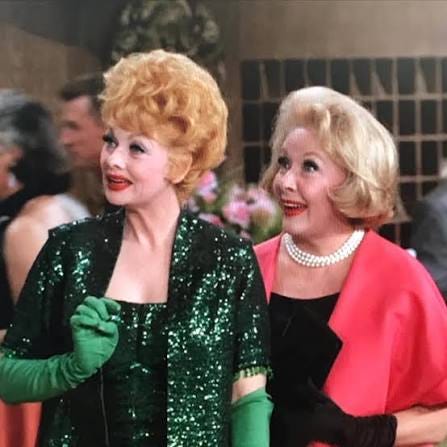
Ball was a mentor to many women in show business. It was important to her that women stand up and be recognized for their talents and not remain in the shadow of men. She had her own difficulties early in her career and faced pushback after she divorced Desi; she was now “just” a woman running the studio. She was like, well, this is a bunch of bullshit, so she made the decision to stop playing nice and, instead, be a hard-ass. It was effective, and it earned her the nickname “Lucille Balls.”
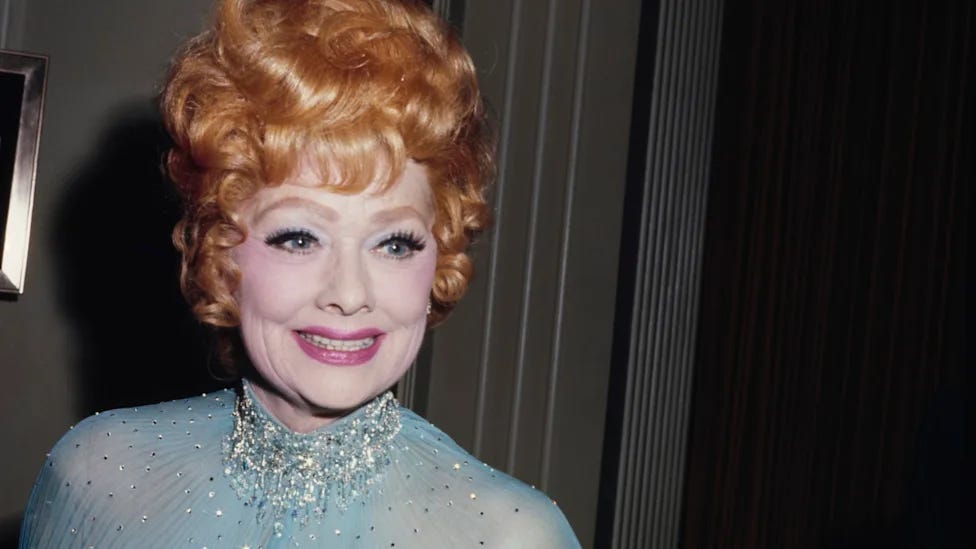
Any time it seemed warranted, she was unabashed in speaking up when men behaved poorly. One shining example is when she appeared on a 1978 episode of the talk show America Alive! - one that would have her working with entertainment reporter and critic David Sheehan.
During a Q&A session with the audience, Ball had to tell Sheehan multiple times to remove his hands from the female audience members. Where most women at that time were still programmed to smile politely and endure, Ball wasn’t fucking having it and called this guy out multiple times, not just on television, but LIVE television over the course of his picking multiple women from the audience to ask questions of Ball.
“Take your hands off her, David.”
“David, will you take your hands away.”
“Will you take your hands off, David.”
“Take your hands off her.”
Ball wore no polite smile when dressing him down. Unsure if he learned anything that day, but you would have had to be obtuse not to.
In 1958, Ball attended the off-Broadway production of Once Upon a Mattress that starred a very new-to-the-scene 25-year-old Carol Burnett. Burnett is quoted as saying that she looked out from behind the curtain and saw “a distinctive red-headed woman” sitting there in the second row.
“I was more nervous seeing her than I had been about opening night,” Burnett has said.
At the conclusion of the show, Ball came backstage to chat with Burnett. They sat in her dressing room for the next half hour, chatting, and they quickly developed what would be a lifelong friendship.
“She called me ‘kid’ because she was 22 years older than I,” Burnett recalled. “Just as she was leaving, she said, ‘Kid, if you ever need me for anything, give me a call.’”
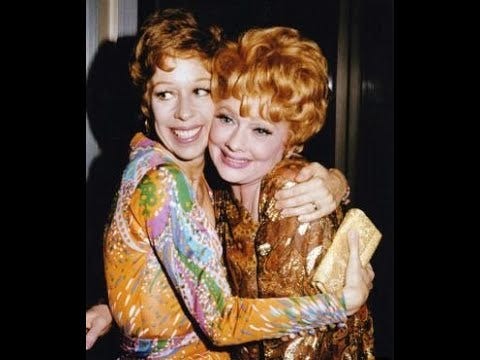
Every year on Burnett’s birthday, Ball would send her flowers with a special note. On Burnett’s 56th birthday in 1989, she turned the TV on and learned that Ball had died that morning.
“That afternoon, the doorbell rang, and there were flowers with a card that read, ‘Happy Birthday, kid,’” she says. “Every year on my birthday, it’s bittersweet because I think of her.”
Lucille Ball lived her life how she saw fit. Full stop. And if you’d asked her a question, you ought to have been prepared for blunt honesty; in praise of or otherwise.
In a 1981 interview for People magazine, she was asked about her favorite women in comedy.
“Carol Burnett—she heads my list, absolutely. That girl can do anything. Nancy Walker too. Goldie Hawn, I love her…”
But when asked about Lily Tomlin, her reply was to the point: “I don’t care for her type of whatever-she’s-doing. I find myself studying Lily rather than enjoying her.”
And when asked about a subject that some people shied away from - gay rights - that wasn’t the case with Ball, of course.
“It’s perfectly all right with me. Some of the most gifted people I’ve ever met or read about are homosexual. How can you knock it?”
How indeed?
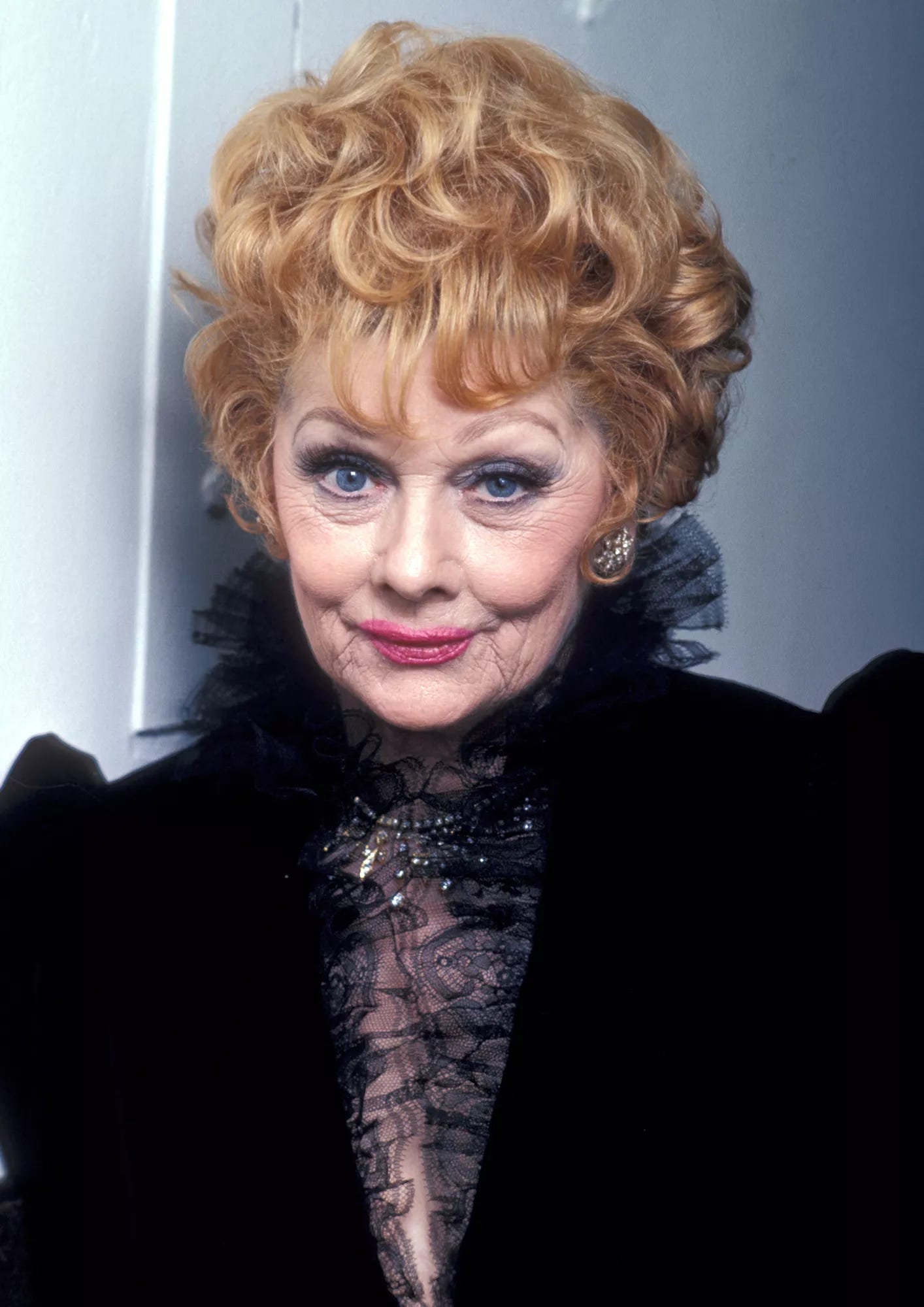
Posthumously, the American Comedy Awards were officially dubbed “The Lucy” after her. In addition, Ball was nominated for 13 Primetime Emmy Awards – she won 5 - was the recipient of the Golden Globe Cecil B. DeMille Award, the Women in Film Crystal Award, an induction into the Television Hall of Fame, a Kennedy Center Honor and many more including but not limited to two stars on the Hollywood Walk of Fame: One for contributions to motion pictures, and the other for her contribution to the arts and sciences of television.
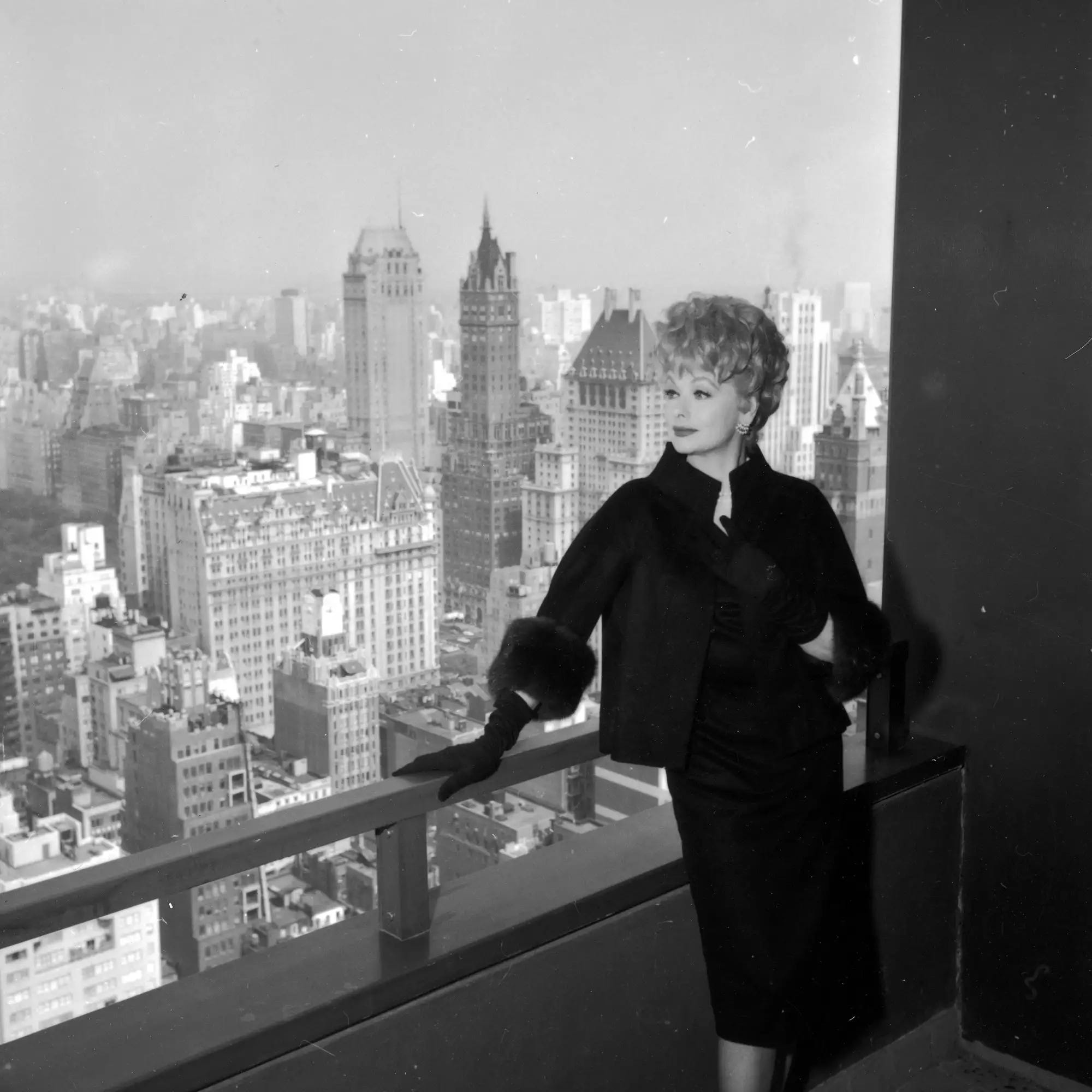
I think she was funny *and* brave. And a true pioneer.