

Mia Zapata
BBBB Volume III Sneak Peek

CW: Mention of rape/violence/substance abuse

The youngest of three children, she was born on August 25, 1965, to Donna and Richard and raised in Louisville, KY. She was an early lover of music, learning to play the piano and the guitar before she was ten years old.
She would go on to be a beacon of light in the early Seattle Punk and Grunge scene as vocalist for the band “The Gits.”
Meet Mia Zapata.
Born in Chicago, Mia Katherine Zapata moved with her family to Louisville, KY in 1974. Both of her parents worked at local television stations but would separate not long after their move to Kentucky. Her father moved to Washington state, and the rest of the family remained in Kentucky.
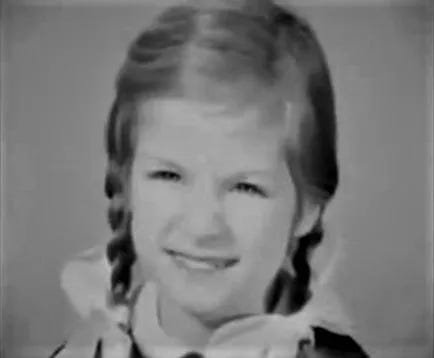
Of Mexican descent on her father’s side, Zapata used to like to tell people that she was a descendant of Mexican Revolutionary fighters, Emiliano and Eufemio Zapata, though that may have been a bit of an embellishment from a creative mind. Her teachers described her as “very imaginative,” and despite suffering from dyslexia, Zapata was writing poetry and song lyrics even back then, drawing many of her themes from the journal she also kept.
Despite being brought up in an upper-middle-class home, Zapata was still deeply connected to her community and didn’t hang with just one crowd. Rather, she was known as a “hub of several social circles.” Always a bit of an anomaly at her all-girls prep school, Presentation Academy, she took to wearing an army jacket over her uniform because fuck your rules.
After graduating high school, she left Kentucky for Yellowspring, Ohio to attend the progressive liberal arts college, Antioch College, which boasts alumni such as women’s rights activist Olympia Brown, and Coretta Scott King, human rights activist and widow of the late Martin Luther King Jr.
Zapata would study art, specifically poetry and painting.
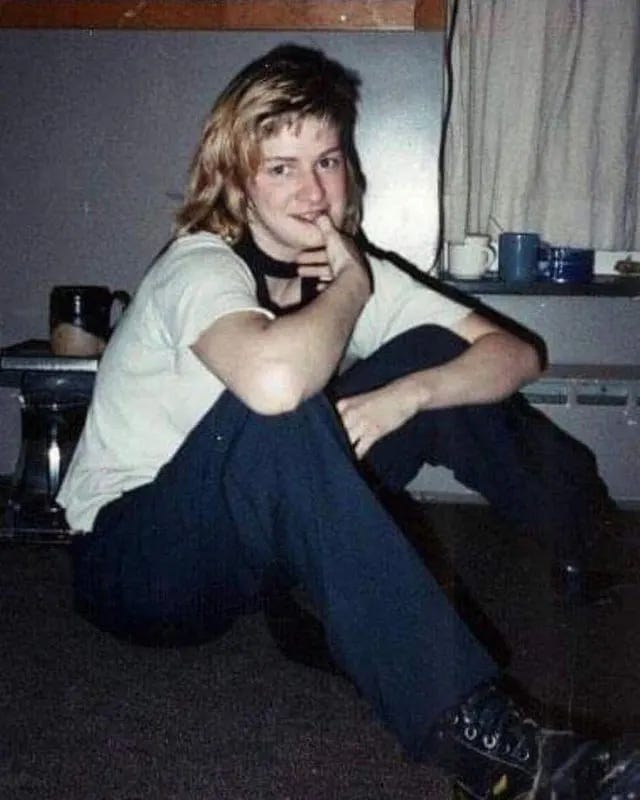
Zapata was also smitten by music of all genres, including but not limited to Billie Holiday, Bessie Smith, Janis Joplin, Patti Smith, and Sam Cooke. And she loved to take in live music at the local clubs in her college town.
This is where she would ultimately meet most of her friends, three of whom Zapata would go on to form a band with after one of them, future-bassist, Matt Dresder, heard her sing in a bar.
At first listen, Dresder immediately KNEW that…
A.) They had to start a band, and
B.) That Zapata had to be the vocalist.
Never mind one tiny detail:
Dresder had, at that point, never picked up an instrument in his life.
Starting out as “Sniveling Little Rat Faced Gits,” which was a nod to a Monty Python skit, the burgeoning band had even obtained permission from the comedy troupe to use as their name.
They wound up condensing it a bit after finding the original name wouldn’t fit on a cassette sleeve.
“The Gits” were officially born.
Zapata and the band were ready to share their music with anyone who would listen, playing anywhere that would have them, from house parties to bowling alleys to opening for other bands in college towns. They began recording their music on cassette tapes and making their own merchandise to promote themselves and to make a little extra cash.
An introvert by nature, Zapata struggled at first with the whole ‘playing to a crowd’ thing and found herself fighting the nerves of stage fright early on. She discovered that alcohol helped her loosen up. She soon realized, however, that that same “help” became a problem for her, and it wouldn’t be long before she found herself not doing well in school and in imminent danger of flunking out.
Her father, Richard, lived in Portland, Oregon at this point and wanted her to move out there closer to him and have her go to rehab, which she finally did in the middle of her junior year of college.
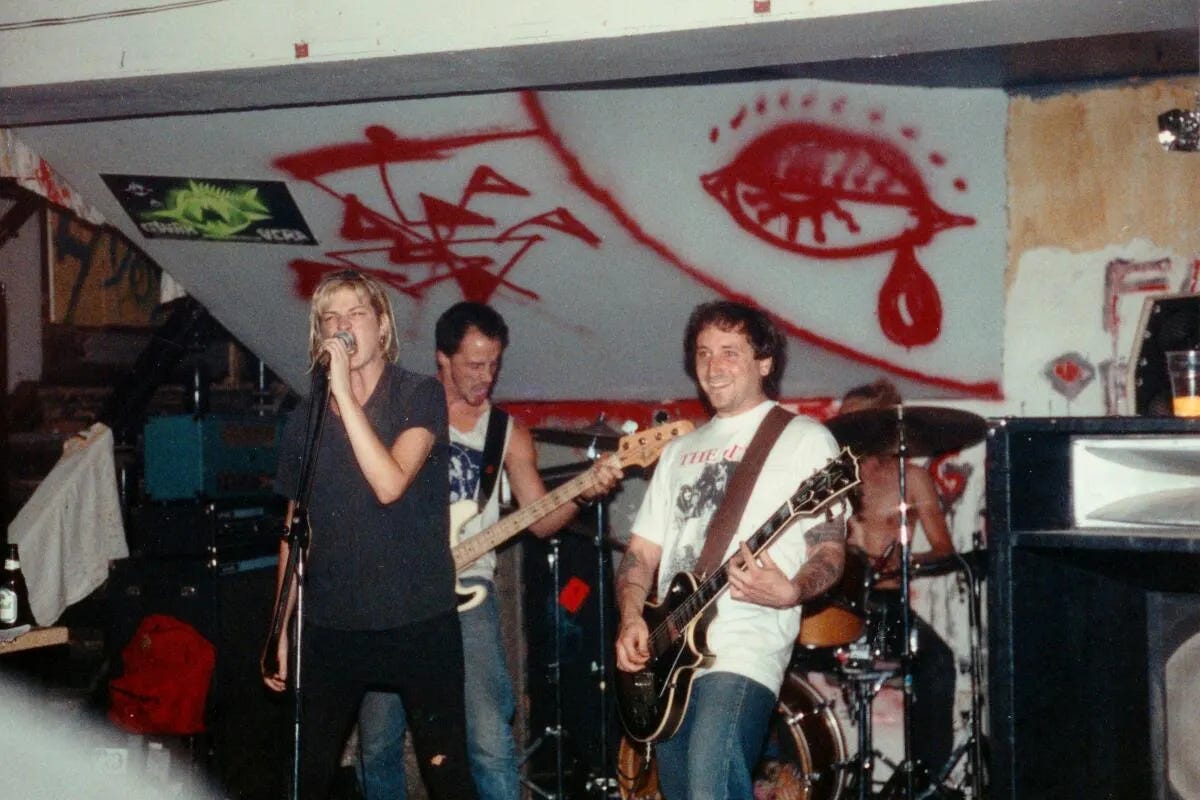
The band, even with the hiatus, was still serious about making it. Once Zapata was out of rehab and doing well again, they decided that the best move would be to do their thing on the West Coast.
After initially moving to San Francisco, they relocated to Seattle in 1989. Zapata and her bandmates lived and practiced at an old, dilapidated house on Capitol Hill known as “The Rathouse,” which eventually evolved into a hangout and recording space for local musicians.
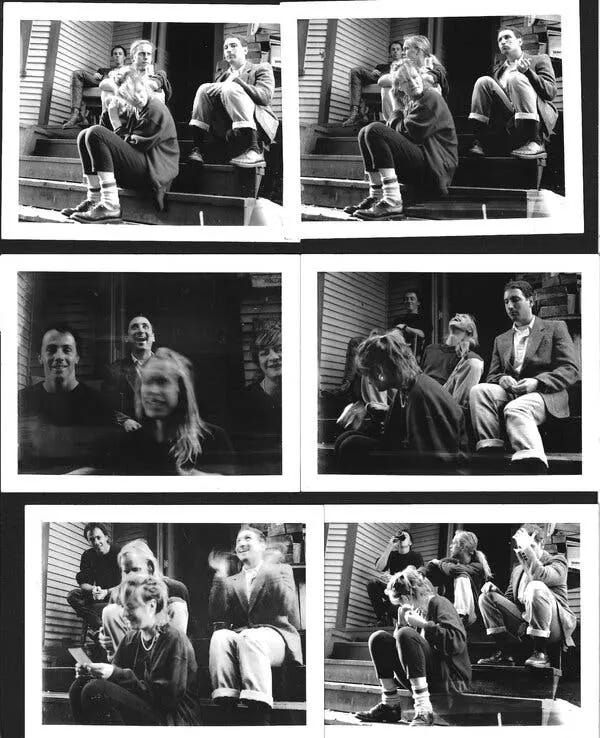
They started performing in local bars almost immediately, and in doing so, quickly developed a devoted following; locally, though the scene was initially chilly due to them being “outsiders’ and not from the area, and then their reputation spread outside Washington.
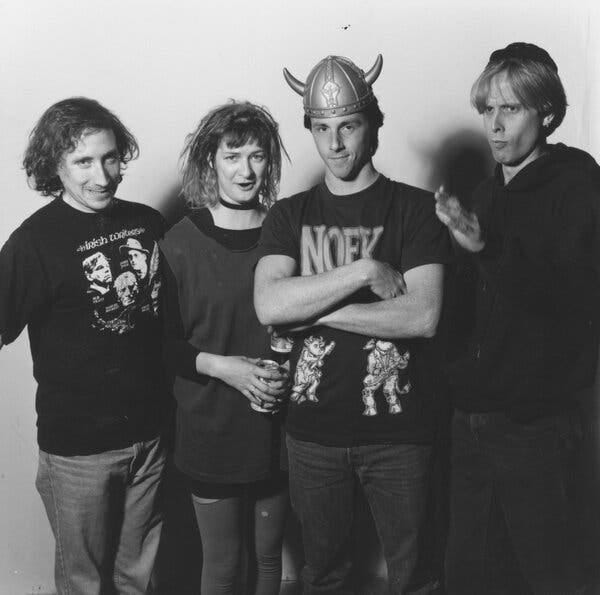
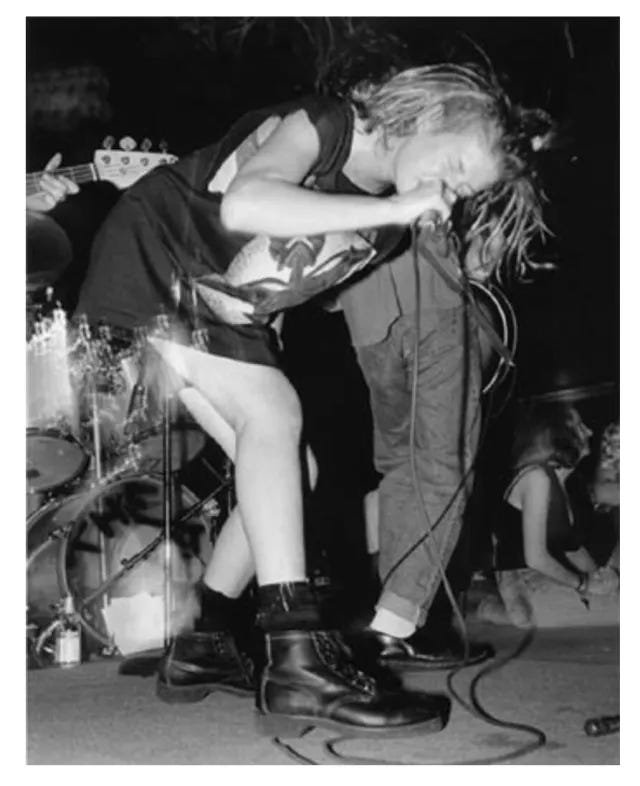
The band as a whole was solid; undeniably punk, yet more melodic and adorned with whispers of Jazz and R&B, but it was Zapata’s strident vocals - that’s what took them from good to iconic. There are some that, due to Zapata’s powerful female presence, still associate The Gits, at least on some level, with the 1990s Riot Grrrl movement, though the band, including Zapata, would have been the first to tell you that this didn’t quite fit.
As NPR’s Sarah Bardeen wrote:
“Compared to many of their contemporaries, the Gits were instrumentally brilliant, playing fast, tight, classic punk rock which took a radical left turn when Zapata added her voice to the mix”.
Zapata and her band found themselves, regardless of their growing fanbase, being snubbed by major labels at the beginning, being passed over by others with less of a following, less experience. Gits drummer, Steve Moriarty, stated in his memoir that while Zapata was absolutely a fucking powerhouse, one of the more dynamic singers in the Seattle scene, that whole “being a woman” in a grunge landscape dominated and suffocated by men was an issue. That and Zapata didn’t fit the image of what they felt a female rock singer was SUPPOSED to project.
Zapata and the band began to buddy up with other “outsiders,” which included all-female punk band “7 Year Bitch.” And they would eventually form their own little record company, “Rathouse Records,” named, of course, for the hovel they would spend much of their time in.
The Gits booked tours in both the US and Europe, and in 1990 they opened for the relative newcomer to the scene, Nirvana.
In 1992, they recorded their first studio album: Frenching the Bully.
Many of the lyrics were penned by Zapata, and her writing covered internal struggle, human resilience, and the importance of community, which DJ and music journalist Martin Douglas has said was “par for the course for the descendant of revolutionaries and a budding revolutionary herself.”
One of the songs from that freshman album, one titled “Spear and Magic Helmet,” Zapata’s lyrics detail the fantasy of avenging a friend’s rape.
The song may have been steeped in fantasy, but the subject matter was real: It was penned to a local musician. And everyone in the scene knew it.
Apart from the band, Zapata also became well-known as a beacon and safe space for people with an addiction, the mentally ill, and the otherwise downtrodden in the area. She treated them with no judgment, just respect and kindness.
According to friends, Zapata had said she always aspired to work with the mentally ill as she felt, as someone who also warred with substance abuse and who never felt she lived up to societal expectations, that these were “her people.” She wanted to help everyone, sometimes due to her own detriment, which would often have her relying more on alcohol to cope when she’d fall into a depressive state.
She’d always find her way back out of “the hole” through music.
The Gits began to enjoy a more widespread fandom. They still hadn’t signed a major record deal, but they were getting favorable write-ups in publications like Spin Magazine, Rolling Stone, The New York Times, and others. The reviews of the band always mentioned Zapata’s strong vocals and lyrics as well as her command of the stage.
In June 1992, however, 7 Year Bitch’s lead guitarist and co-founder, Stefanie Sargent, relapsed after an eight-month run at sobriety. She died after passing out flat on her back and asphyxiating on her own vomit.
Sargent was only 24.
This time, music wasn’t as effective a lifeline. Zapata was descending deeply into depression and just utterly unraveling. She began drinking heavily. An already tumultuous relationship with a man named Robert became more so, and they eventually called it quits.
Zapata began to isolate herself from friends and began missing band practice.
It got so bad that her voice was shot. The band, who had been working on a new album, finally just laid down tracks without vocals. And they decided to stop gigging for a while because Zapata was a hot fucking mess; when she did show up, she was usually wasted and forgetting lyrics.
The band “hit pause” and waited for Zapata to get her shit together.
Which she did.
She didn’t completely kick drinking, but she cut way back and began to get healthier. Her voice came back as well as her resolve, and she was ready to “hit play” once again.
They began a three-week tour in June, starting in Portland, OR, with several dates in California. At their San Francisco gig, Zapata, who had been working on a solo set, sang a song of hers, accompanied only by Dresden on acoustic guitar. This performance was by far the most intimate, personal performance she had ever given.
Later, when the band ended up in LA, they were approached by an Atlantic Records representative.
Finally. It was happening.
After more talks and a meeting with a music attorney there in Los Angeles, Zapata and the boys headed back north, as they had another show in Portland on the first of July.
The next day, they played for an all-ages club in Eastern Washington, and on July 4th, they headed back to Seattle.
On the road, Zapata turned to drummer Moriarty and expressed her desire to maybe put out a solo album, too. She was hesitant to bring it up, worried what the rest of the band would think, if they’d be angry.
On the contrary: They were her family, and they supported her.
A couple days later Zapata had spent the evening at a bar frequented by folks in the local music scene, a dive on East Pike called Comet Tavern.
Just after 2am on July 7th, Zapata left the tavern and stopped briefly to chat with a friend before embarking on the long walk back to her place.
That was the last time Zapata was seen alive.
At 3:30am, Mia Zapata’s body was found beaten, raped, and strangled on the road just off East Yesler Way. She was bludgeoned so badly, the medical examiner stated, that even had she not been strangled, she would absolutely still be dead from these injuries.
Emergency services couldn’t identify her body at first, as she didn’t have any ID on her person.
However, the medical examiner was able to identify her upon arrival. He had been a huge fan of The Gits and recognized her at once.
The entire Seattle music scene was crushed.
When law enforcement dragged their feet on pursuing her homicide case after having no real leads to go on, Zapata’s community came together and raised $70K, both from benefit shows and donating their own funds. They hired a private investigator to pick up the local police department’s slack.
In 1996, Zapata’s friends and family finally managed to catch the attention of the television show that haunted many of us during its run, “Unsolved Mysteries,” and later, Zapata’s case appeared on several other true-crime television shows.
Still nothing.
It wouldn’t be until 2002 that a random DNA test would match her killer to saliva that had been found on a bite mark on Zapata’s breast.
48-year-old fisherman, Jesus Mezquia, who had an established history of violence against women and had no fucking business walking free in the first place, is theorized to have stalked Zapata after she left the bar that night in 1993, dragging her back to his car, murdering her, and then dumping her body on the road like trash.
For every woman, this is a nightmare come true, the end we’re all warned about if we have the audacity to walk alone after dark.
The fate we are statistically going to realize at the hands of a violent man for merely attempting to walk from point A to point B.
Zapata was 27 years old.
After being laid to rest in the Cave Hill cemetery back in her hometown of Louisville, Zapata’s friends in the scene created a self-defense non-profit called “The Home Alive Group.” With the participation of bands from the area, including Heart, Soundgarden, Pearl Jam and Nirvana, Home Alive raised funds to empower women with skills to fight would-be attackers. The organization’s offerings included courses on the proper use of pepper spray to anger management to martial arts.
Allison Wolfe, whose band Bratmobile opened for The Gits at their June 1993 performance in Los Angeles, took mother-daughter firearms lessons through the non-profit.
In 1994, the studio album that Zapata was in the process of recording with her band before her death, Enter: The Conquering Chicken, was released posthumously. The album includes a cover of one of Zapata’s favorite songs by Sam Cooke: “A Change is Gonna Come.”
Also in 1994, 7 Year Bitch released their tribute to Zapata, “¡Viva Zapata!”
Kathleen Hanna and Joan Jett wrote a song called “Go Home” that would appear on Jett’s 1994 album, Pure and Simple.
The song also appears on the 1995 album Evil Stig, a self-titled effort by the supergroup formed by Jett and surviving members of The Gits. The record and the supporting shows were to raise money for Zapata’s murder investigation.
Evil Stig is, of course, “Gits Live” in reverse.
The music video for “Go Home” depicts a woman who is being stalked and attacked by a man.
But in the video, she’s then able to defend herself against the assailant and escape.
Alive.

Thank you for this one, Lisa. During this time frame, I was struggling as a young single parent and the popular music scene really wasn't on my radar. I missed out on a lot. Now I know Zia. I wish she was still here so I could get to know her now.
💔🫶🏼🎼